
위험을 다루는 순서,
보호구는 마지막 수단이다
보호구를 지급했다고 위험이 사라진 것이 아니다. 위험관리의 5원칙은 제거에서 시작해 행동으로 완성되며, 그 순서가 곧 안전수준의 차이를 만든다.
The Order of Risk Control,
PPE Is the Last Resort
Issuing PPE does not make the hazard disappear. The five principles of risk management begin with elimination and end with behavior — and that order determines the level of safety.
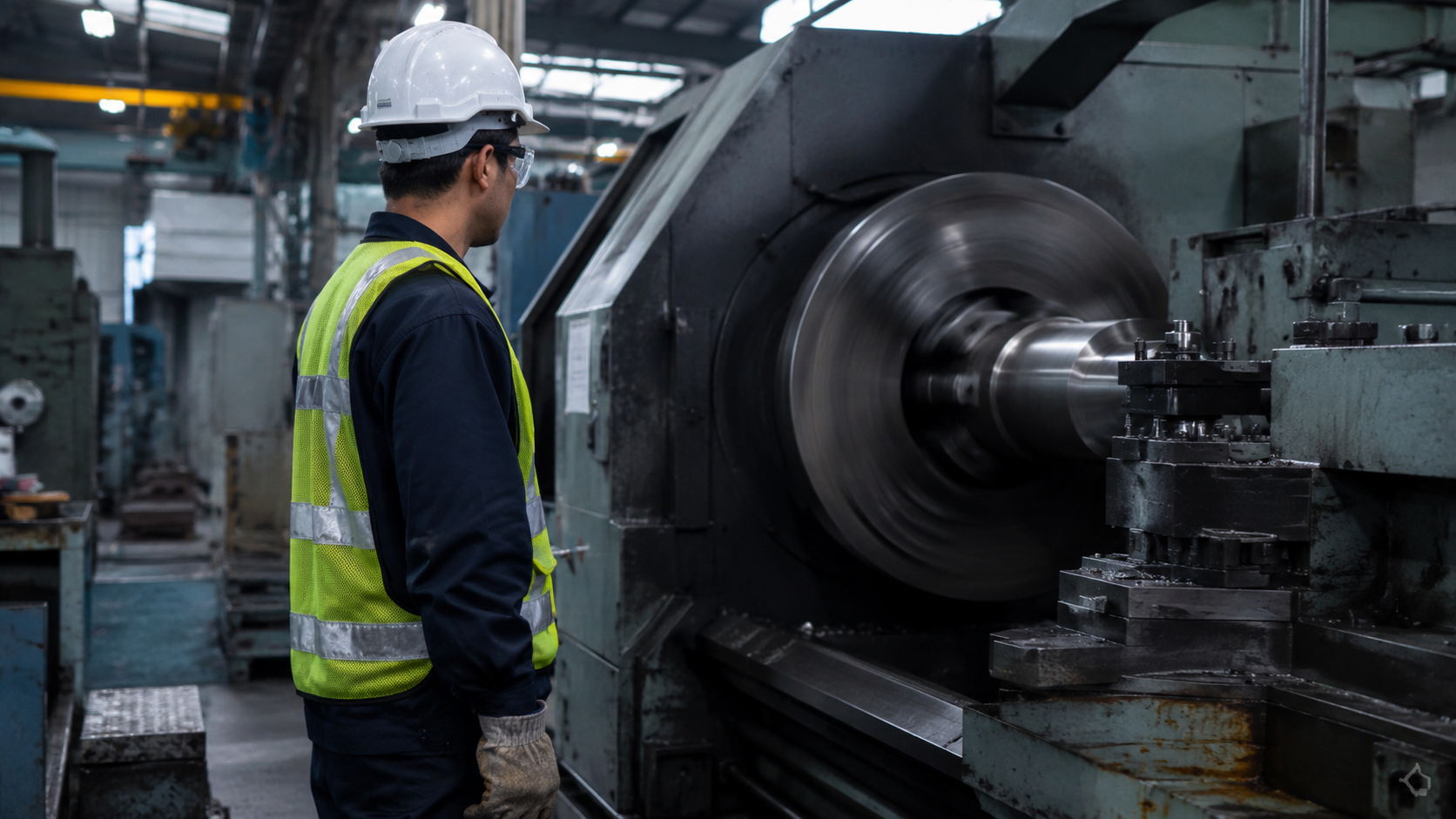
보호구를 착용하면 안전해진다는 생각은 틀리지 않지만, 완전하지도 않다. 보호구는 위험이 신체에 도달하는 순간을 마지막으로 막아주는 수단이지, 위험이 사라졌다는 의미가 아니며, 회전체는 여전히 돌고 있고 유해물질은 여전히 공기 중에 존재하며 중량물은 여전히 무겁다. 보호구를 착용한 상태에서도 끼임사고는 발생하고, 호흡보호구를 쓴 상태에서도 유해가스 중독은 일어난다. 위험이 그 자리에 있는 한, 보호구는 마지막 방어선일 뿐 근원적인 해결책이 아니다.
위험관리의 5가지 원칙과 10가지 방법은 이 한계를 넘어서기 위한 체계적 판단의 틀이다. 위험원을 제거하거나 대체하고, 불가능하다면 격리하며, 그래도 위험이 남는다면 방호장치로 접촉을 차단하고, 작업자에게 적절한 도구와 보호구를 제공하며, 마지막으로 안전한 위치와 행동기준으로 남아 있는 위험에 대응하는 흐름이다. 이 순서는 안전대책의 강도와 신뢰성을 기준으로 배열되어 있으며, 위쪽 원칙일수록 사람의 판단이나 의지에 덜 의존하고 더 구조적으로 위험을 통제한다.
The belief that wearing PPE makes a workplace safe is not wrong — but it is incomplete. PPE is the final barrier between a hazard and the human body, not evidence that the hazard has been removed. The rotating shaft is still turning. The toxic substance is still in the air. The heavy load is still heavy. Crush injuries happen to workers wearing gloves; gas poisoning happens to workers wearing respirators. As long as the hazard remains, PPE is the last line of defense — not a fundamental solution.
The five principles and ten methods of risk management provide a systematic framework for moving beyond this limitation. The sequence runs from eliminating or substituting the hazard, to isolating it, to installing physical safeguards, to reinforcing the worker with appropriate tools and equipment, and finally to managing residual risk through safe positioning and behavioral standards. This order is arranged by the strength and reliability of each control measure — the higher the principle, the less it depends on individual judgment or willpower, and the more structurally it controls the hazard.
위험원 제거 — 가장 강력하지만 가장 어려운 수단
위험관리의 첫 번째 원칙은 위험원 자체를 없애는 것으로, 유해성이 높은 화학물질을 무해한 물질로 대체하거나, 끼임 위험이 큰 수작업 공정을 없애거나, 중량물을 사람이 직접 취급하지 않아도 되도록 공정 자체를 바꾸는 방식이 여기에 해당하며, 이 원칙이 실현되면 나머지 원칙들을 적용할 필요 자체가 줄어든다는 점에서 가장 근원적인 통제수단으로 평가된다. 위험이 사라진 작업장에서는 방호장치가 제대로 닫혀 있었는지, 보호구를 착용했는지, 작업자가 충분히 주의했는지를 따질 이유가 없다.
그러나 위험원 제거는 가장 이상적인 동시에 가장 현실적 제약이 많은 수단이기도 하다. 현존 기술로 위험한 공정 자체를 없애기 어렵거나, 대체물질이 존재하지 않거나, 설비 변경에 수반되는 비용이 사업장의 규모를 감안할 때 사실상 불가능에 가까운 경우가 많으며, 생산공정의 특성상 해당 공정을 유지하지 않으면 제품의 품질이나 생산효율을 확보할 수 없는 경우도 적지 않다. 따라서 위험원 제거는 위험성평가에서 개선대책을 검토할 때 언제나 가장 먼저 가능성을 따져야 하지만, 그 적용이 어렵다는 이유만으로 이후 단계로 곧바로 넘어가는 것을 당연시해서도 안 된다.
위험원 격리 — 위험과 사람 사이에 구조적 거리를 만드는 일
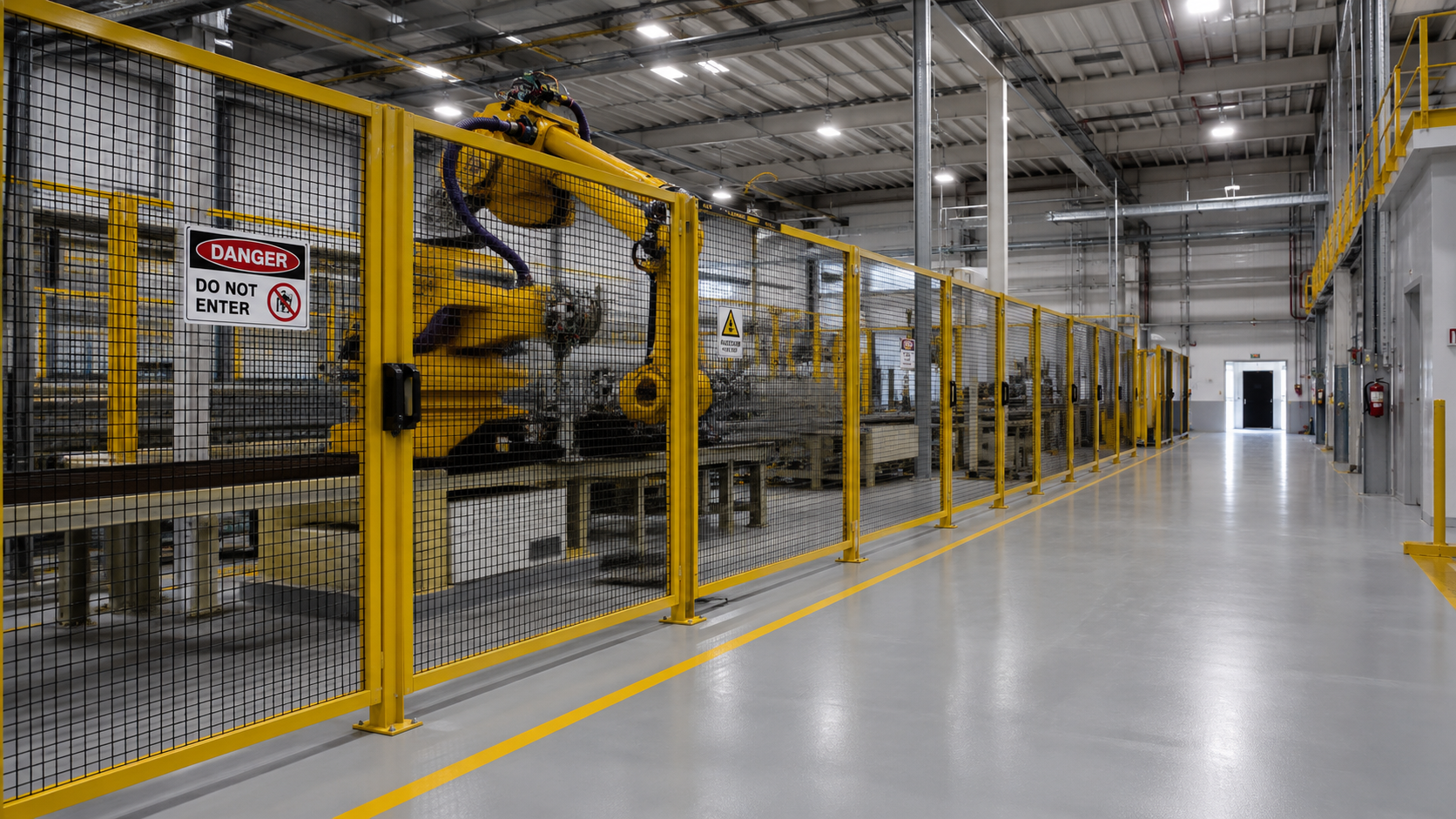
위험원을 완전히 제거할 수 없다면 다음 단계는 위험이 작업자에게 도달하는 경로를 끊는 것으로, 위험원 격리는 위험 자체는 현장에 남아 있지만 그 위험이 작업자와 직접 접촉하지 않도록 공간적·기능적 거리를 확보하는 방식이며, 울 또는 칸막이 설치와 자동화 및 원격조작이 대표적인 방법이다. 로봇 작업구역에 안전펜스를 설치하거나, 고온·고압 설비를 별도 구획 안에 배치하거나, 조작실에서 설비를 원격으로 운전하도록 전환하는 방식이 이에 해당한다.
자동화와 원격조작은 격리의 가장 적극적인 형태로, 사람이 설비 가까이 접근해 손을 넣고 얼굴을 기울여야 했던 작업을 기계나 장비가 대신 수행하게 함으로써 위험과 사람의 접점 자체를 구조적으로 줄이는 방식이며, 고온, 회전체, 유해가스, 밀폐공간, 고소작업처럼 접근 자체가 위험한 환경에서는 자동화와 원격조작이 편의 수단이 아니라 핵심적인 안전관리 수단이 된다. 격리의 본질은 작업자가 위험을 인지하고 피하는 것이 아니라, 통상적인 작업 과정에서 위험구역으로 들어갈 필요가 없도록 작업동선과 설비 배치, 유지보수 방식을 구조적으로 설계하는 데 있다.
격리는 위험을 없애지 못하지만, 위험이 사람에게 닿는 경로를 끊어낸다. 그리고 그 경로를 끊는 것은 울타리를 세우는 행위가 아니라, 작업 전체를 다시 설계하는 일이다.
Elimination — The Most Powerful, Most Difficult Control
The first principle of risk management is removing the hazard itself — substituting a toxic chemical with a harmless alternative, eliminating a process with entrapment risks, or redesigning workflows so workers no longer need to manually handle heavy loads. When this principle is successfully applied, the need to apply every subsequent principle diminishes accordingly. In a workplace where the hazard no longer exists, there is no need to ask whether the guard was closed, whether PPE was worn, or whether the worker was sufficiently attentive.
Yet elimination is simultaneously the most ideal and the most constrained of all control measures. Existing technology may make it impossible to remove certain processes entirely; no viable substitutes may exist; the cost of equipment modification may be prohibitive given the scale of the organization; or the nature of the production process may make it impossible to maintain quality or efficiency without preserving the current method. Elimination must always be the first possibility examined when developing risk control measures — but the difficulty of applying it should never be treated as automatic justification for skipping directly to a lower-order control.
Isolation — Creating Structural Distance Between Hazard and Person
When complete elimination is not feasible, the next step is severing the path by which the hazard reaches the worker. Isolation keeps the hazard present in the workplace while establishing physical and functional distance — through safety fencing, enclosures, automation, or remote operation — so that workers do not need to enter the danger zone during normal work. Installing safety fences around robotic work cells, enclosing high-temperature or high-pressure equipment in dedicated compartments, and converting operations to remote control from a separate control room are all representative applications.
Automation and remote operation represent the most proactive form of isolation: replacing tasks that once required workers to reach into machinery, lean over equipment, or bring their faces close to hazardous areas with mechanical or remote alternatives, structurally reducing the points of contact between hazard and person. In environments where approach itself is dangerous — high heat, rotating machinery, toxic gases, confined spaces, work at height — automation and remote operation are not conveniences but core safety controls. The essence of isolation lies not in telling workers to recognize and avoid danger, but in designing work routes, equipment layout, and maintenance procedures so that entering the hazard zone is simply unnecessary.
Isolation does not eliminate the hazard — but it severs the path by which the hazard reaches a person. And severing that path is not a matter of putting up a fence. It is a matter of redesigning the entire work process.
위험원 방호 — 사람의 실수를 전제한 물리적 안전망
위험원 방호는 격리와 유사하지만, 작업자가 위험부위에 인접하여 작업해야 하는 상황을 전제로 한다는 점에서 다르다. 회전체의 축, 벨트, 체인, 프레스 금형, 절단날, 고온 배관, 분진 발생부 등에 덮개나 방호커버를 설치하고, 문이 열리면 설비가 정지되는 인터록이나 손이 위험영역에 들어가면 작동을 멈추는 광전자식 방호장치, 접근을 감지하는 센서류를 설치하는 방식이 이에 해당하며, 격리가 위험구역 전체와 사람을 분리하는 개념이라면 방호는 특정 위험부위와 신체의 접촉 자체를 물리적으로 차단하는 장치적 개념에 가깝다.
방호의 가장 중요한 특성은 작업자의 의지와 주의력에 의존하지 않는다는 점으로, 사람은 피로하거나 익숙해지면 위험을 과소평가하고 작업속도에 쫓기면 불안전한 자세를 선택하며 반복작업에서는 순간적인 부주의가 발생하기 마련인데, 방호장치는 이러한 휴먼에러가 발생하더라도 신체가 위험부위에 도달하지 못하도록 구조적으로 막아준다. 다만 방호장치는 설치 자체보다 유지와 사용성이 더 중요하며, 작업에 방해된다는 이유로 덮개를 열어둔 채 운전하거나 센서를 임의로 무력화한다면 방호의 기능은 사라지므로, 현장에서 실제로 사용 가능한 구조로 설계되고 지속적으로 관리되어야 한다.
방호장치는 위험을 숨기는 장치가 아니라, 사람이 실수해도 사고로 이어지지 않도록 만드는 물리적 안전망이다.
사람 측면의 보강 — 남은 위험을 안전하게 다루는 조건
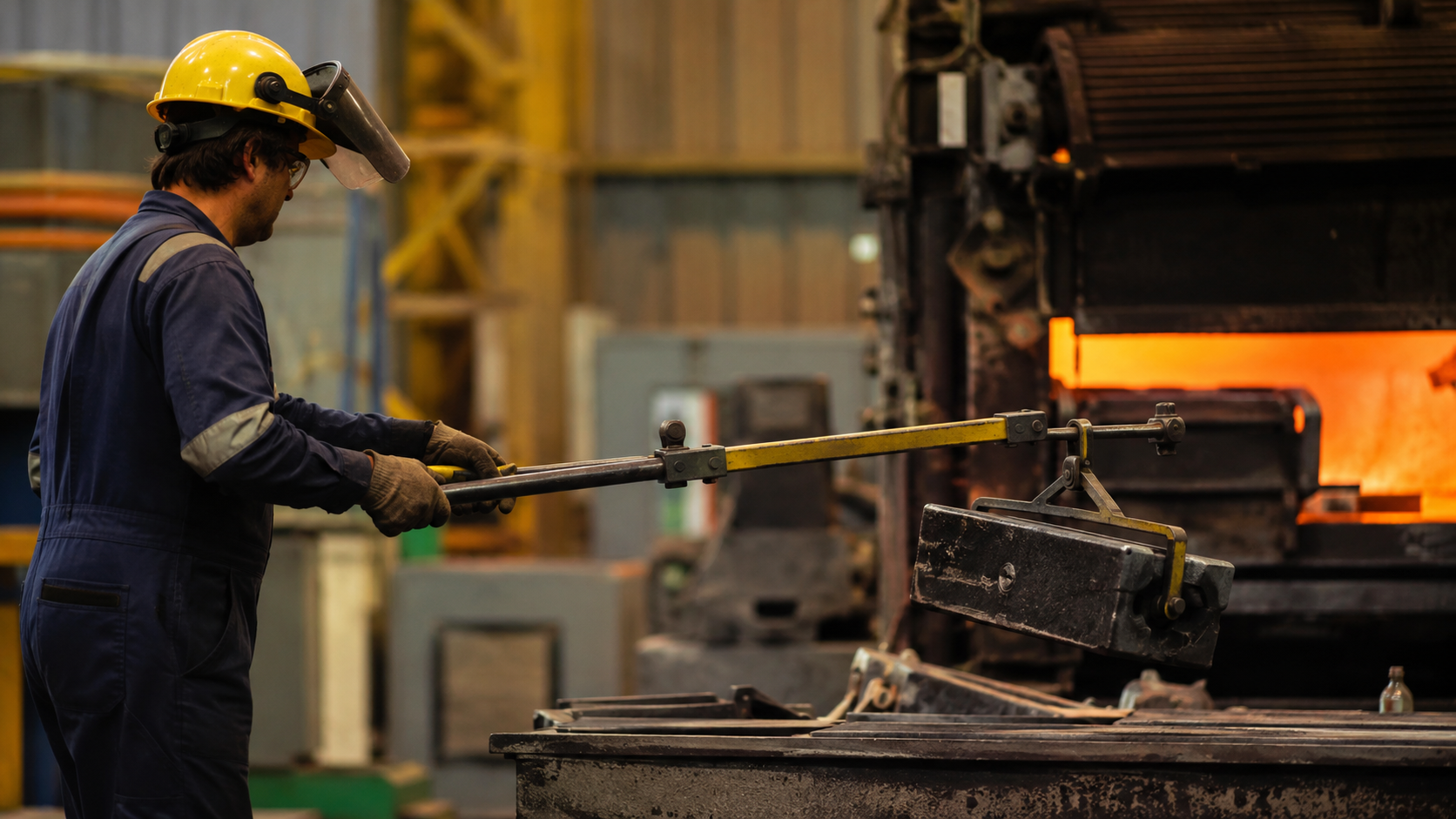
위험원을 제거하거나 격리하고 방호장치를 설치하더라도 모든 위험을 완전히 통제할 수는 없으며, 이때 필요한 것이 사람 측면의 보강이다. 손으로 직접 취급하던 중량물을 리프트나 호이스트로 옮기도록 하거나, 설비 내부를 확인하기 위해 얼굴을 가까이 들이밀던 작업에 내시경카메라를 도입하거나, 고온부를 직접 만질 가능성이 있는 작업에 단열장갑을 지급하고 분진이나 유해가스 노출 작업에 적정한 호흡보호구를 제공하는 방식이 이에 해당하며, 적절한 공구와 보조장비는 불안정한 자세와 과도한 힘, 반복적인 신체 부담을 줄여주고 작업자가 위험한 위치에 몸을 넣지 않고도 작업을 수행할 수 있게 한다.
이 단계에서 반드시 기억해야 할 점은 보호구가 최우선 대책이 아니라는 사실로, 보호구는 작업자에게 마지막으로 제공되는 개인적 방어수단이며 위험원이 제거되거나 격리되지 않은 상태에서 보호구만으로 위험을 관리하려 하면 관리 수준이 낮아질 수 있다. 따라서 사람 측면의 보강은 보호구 지급과 장비 제공을 넘어, 작업자가 위험을 직접 감당하지 않고도 작업을 완수할 수 있는 조건을 만드는 관리수단으로 이해되어야 한다.
사람 측면의 보강은 위험을 개인에게 맡기는 것이 아니라, 사람이 위험을 직접 감당하지 않도록 작업조건을 보완하는 과정이다.
Safeguarding — A Physical Safety Net That Assumes Human Error
Safeguarding resembles isolation but differs in a critical respect: it presupposes that workers must operate in proximity to hazardous parts. Installing protective covers or guards over rotating shafts, belts, chains, press dies, cutting blades, high-temperature piping, and dust-generating components; fitting interlocks that stop equipment when a door is opened; installing photoelectric safety devices that halt operation when a hand enters the danger zone; deploying sensors that detect approach — these are all representative safeguarding measures. Where isolation separates the worker from the entire hazard zone, safeguarding physically blocks contact between specific hazardous parts and the human body.
The defining characteristic of safeguarding is that it does not depend on worker willpower or attention. People grow fatigued, become desensitized to familiar hazards, cut corners under time pressure, and experience momentary lapses during repetitive tasks — safeguards are designed to prevent these entirely human failures from allowing the body to reach the hazardous point, or to ensure that a dangerous condition triggers an immediate stop. That said, the maintenance and usability of safeguards matter more than their installation alone; a guard left open because it interferes with work, or a sensor deliberately bypassed, renders the safeguard completely ineffective. Safeguards must be designed for practical use and actively maintained throughout the life of the equipment.
A safeguard is not a device that conceals danger. It is a physical safety net that ensures a human error does not become an industrial accident.
Human-Side Reinforcement — Creating the Conditions to Handle Residual Risk Safely
Even after elimination, isolation, and safeguarding have been applied, not every hazard can be fully controlled — and this is where human-side reinforcement becomes necessary. Replacing manual handling of heavy loads with lifts, hoists, or carts; introducing endoscope cameras where workers previously had to bring their faces close to internal equipment to inspect it; providing insulated gloves for work involving contact with hot surfaces; supplying appropriate respiratory protection for tasks with dust or toxic gas exposure — all of these reduce unstable postures, excessive force, and repetitive physical strain, allowing workers to complete tasks without placing their bodies in hazardous positions.
The essential point at this stage is that PPE is not a primary control measure. It is the last personal defense available to the worker — and relying on PPE alone, without first eliminating or isolating the hazard, results in a fundamentally inadequate safety management approach. Human-side reinforcement must be understood not as delegating risk to the individual, but as systematically improving the working conditions so that workers are not required to absorb danger with their own bodies.
Human-side reinforcement is not about assigning risk to the individual. It is about improving working conditions so that people are not required to personally absorb the danger that remains.
사람 측면의 대응과 위험관리의 완성
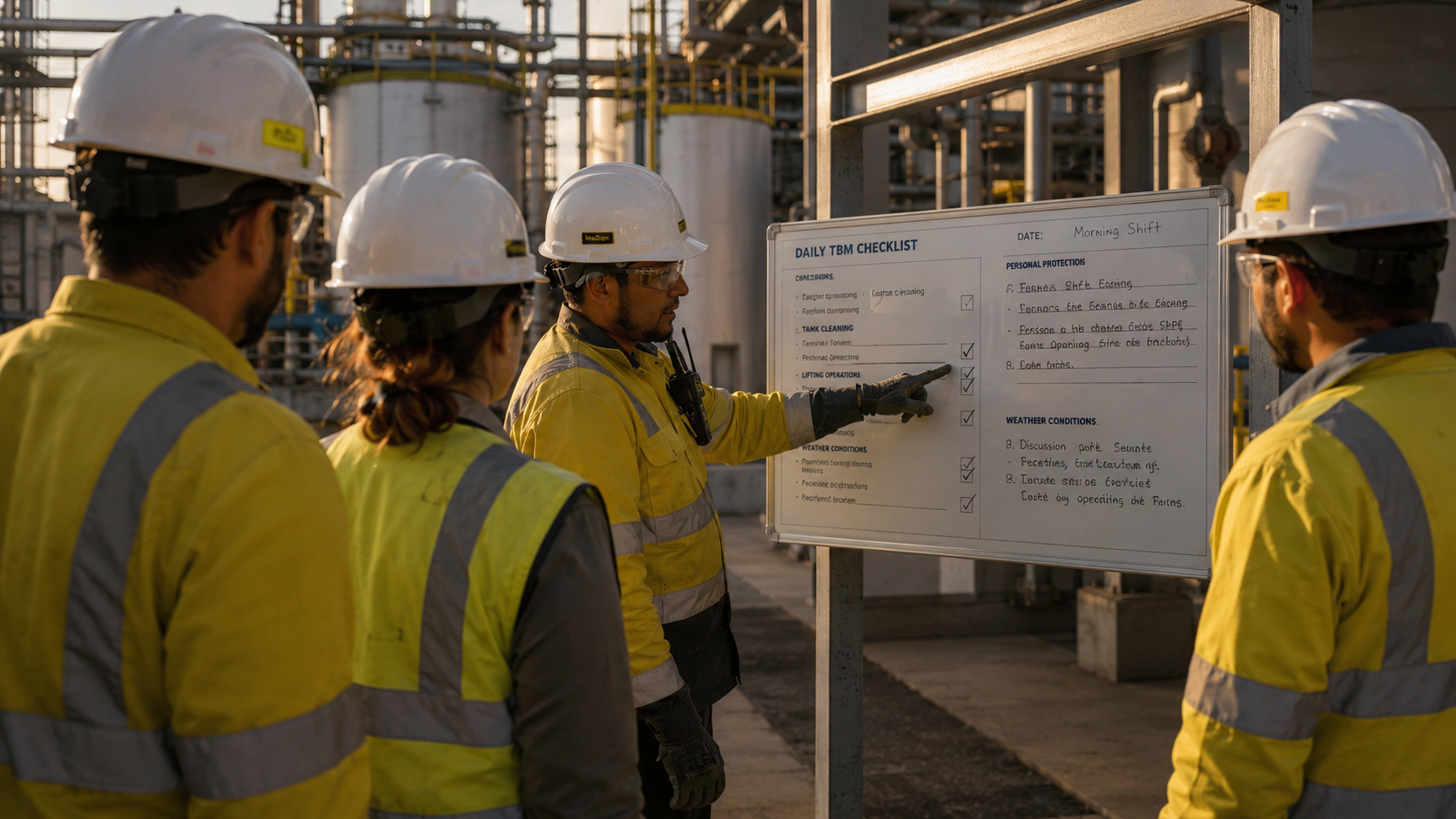
위험관리의 마지막 원칙은 남아 있는 위험을 작업자가 올바르게 인지하고 일정한 기준에 따라 행동하도록 만드는 것으로, 지게차 작업구역에서 보행자의 위치를 정하거나, 크레인 인양작업 중 신호수의 위치와 대피공간을 확보하거나, 설비 정비 시 전원 차단과 잠금표지를 확인한 뒤 작업을 시작하도록 하는 절차가 이에 해당한다. 작업 전 TBM을 통해 당일 작업의 위험요인과 통제방법을 공유하고, 비정상작업이나 돌발작업이 발생했을 때 즉시 작업을 멈추고 재평가하도록 하는 기준도 여기에 포함된다.
휴먼에러는 개인의 부주의만으로 설명되지 않으며, 불명확한 작업지시, 복잡한 절차, 촉박한 시간, 혼재된 동선, 반복되는 예외작업은 모두 실수를 유도하는 조건이 되므로, 이 단계의 목표는 "조심하라"는 말이 아니라 실수가 발생하기 어려운 작업환경과 행동기준을 설계하는 것이다. 위험관리의 5원칙은 각각 독립된 기법이 아니라 하나의 순서로 이해해야 하며, 제거는 관리의 필요 자체를 줄이는 대책이고, 격리와 방호는 위험이 사람에게 전달되는 경로를 구조적으로 차단하는 대책이며, 보강과 대응은 남아 있는 위험을 안전하게 다루기 위한 대책으로, 이 순서를 역행하여 곧바로 교육 실시나 보호구 착용으로 마무리하는 것은 더 근원적인 단계의 가능성을 검토하지 않은 채 위험을 사람에게 떠넘기는 결과로 이어질 수 있다.
안전행동은 개인의 의지만으로 유지되지 않는다. 현장이 같은 기준으로 움직일 때 비로소 안전은 문화가 된다.
위험관리의 순서가 안전수준을 결정한다
안전한 작업장은 위험한 설비를 그대로 두고, 위험한 동선을 그대로 두며, 불안정한 자세를 그대로 둔 채 작업자에게 조심을 요구하는 방식으로 만들어지지 않는다. 위험을 사람에게 가까이 두지 않도록 설계하고, 불가피하게 남은 위험은 방호와 절차, 장비와 행동기준으로 촘촘히 통제하는 다층적 방어 체계가 작동할 때, 비로소 사업장은 자율적 안전관리체계에서 지향하는 근원적 안전에 한 걸음 더 가까워진다. 위험관리는 제거에서 시작해 행동으로 완성되며, 그 사이에는 격리, 방호, 보강이라는 여러 겹의 안전장치가 반드시 놓여야 한다.
안전한 작업장은 위험을 잘 피하는 사람에게 의존하지 않는다. 위험이 사람에게 닿기 어려운 구조를 먼저 만들고, 남은 위험은 여러 겹의 통제수단으로 감싸는 것이다.
Behavioral Response — The Final Principle and the Completion of Risk Management
The final principle of risk management involves ensuring that workers correctly recognize residual hazards and act in accordance with established standards. Designating where pedestrians must stand in forklift operating zones, securing the position of signal operators and evacuation spaces during crane lifts, confirming power isolation and lockout tags before beginning equipment maintenance — these are all representative applications. Pre-work TBM sessions that share the day's hazards and control measures, and standards requiring workers to immediately stop and reassess when non-routine or unexpected tasks arise, also fall within this principle.
Human error cannot be attributed solely to individual carelessness. Unclear work instructions, overly complex procedures, time pressure, congested work routes, and repeatedly occurring exceptional tasks are all conditions that make mistakes more likely — and the goal at this stage is not to tell workers to "be careful," but to design work environments and behavioral standards in which errors are harder to make. The five principles of risk management must be understood as a single ordered sequence, not as independent techniques: elimination reduces the need for control itself; isolation and safeguarding structurally sever the path by which hazard reaches people; reinforcement and behavioral response manage what remains. Bypassing this sequence to conclude with "safety training" or "wear your PPE" — without first examining the possibility of higher-order controls — effectively transfers the burden of danger onto the individual worker.
Safe behavior cannot be sustained by individual willpower alone. Safety becomes a culture only when an entire workplace operates according to the same standards.
The Order of Risk Management Determines the Level of Safety
A safe workplace is not built by leaving hazardous equipment in place, leaving dangerous traffic routes unchanged, leaving unstable postures uncorrected, and asking workers to be more careful. It is built through a layered defense system in which hazards are kept away from people by design, and whatever risk inevitably remains is tightly controlled through safeguards, procedures, equipment, and behavioral standards. When this multi-layer system operates as intended, the workplace moves meaningfully closer to the intrinsic safety that autonomous safety management frameworks are designed to achieve. Risk management begins with elimination and ends with behavior — and between those two points, the layers of isolation, safeguarding, and reinforcement must be firmly in place.
A safe workplace does not rely on workers who are skilled at avoiding danger. It is built by first creating a structure in which danger is difficult to reach — and wrapping whatever remains in multiple layers of control.