익숙한 눈이 놓치는 것,
낯선 눈이 발견하는 것
안전은 보이는 것을 관리하는 일이 아니라, 보이지 않던 것을 보이게 만드는 과정이며, 그 출발점은 종종 내부가 아닌 외부의 시선에서 시작된다.
What Familiar Eyes Miss,
What Strange Eyes Find
Safety is not about managing what is visible — it is about making the invisible visible. And that process often begins not from within, but from an outside perspective.
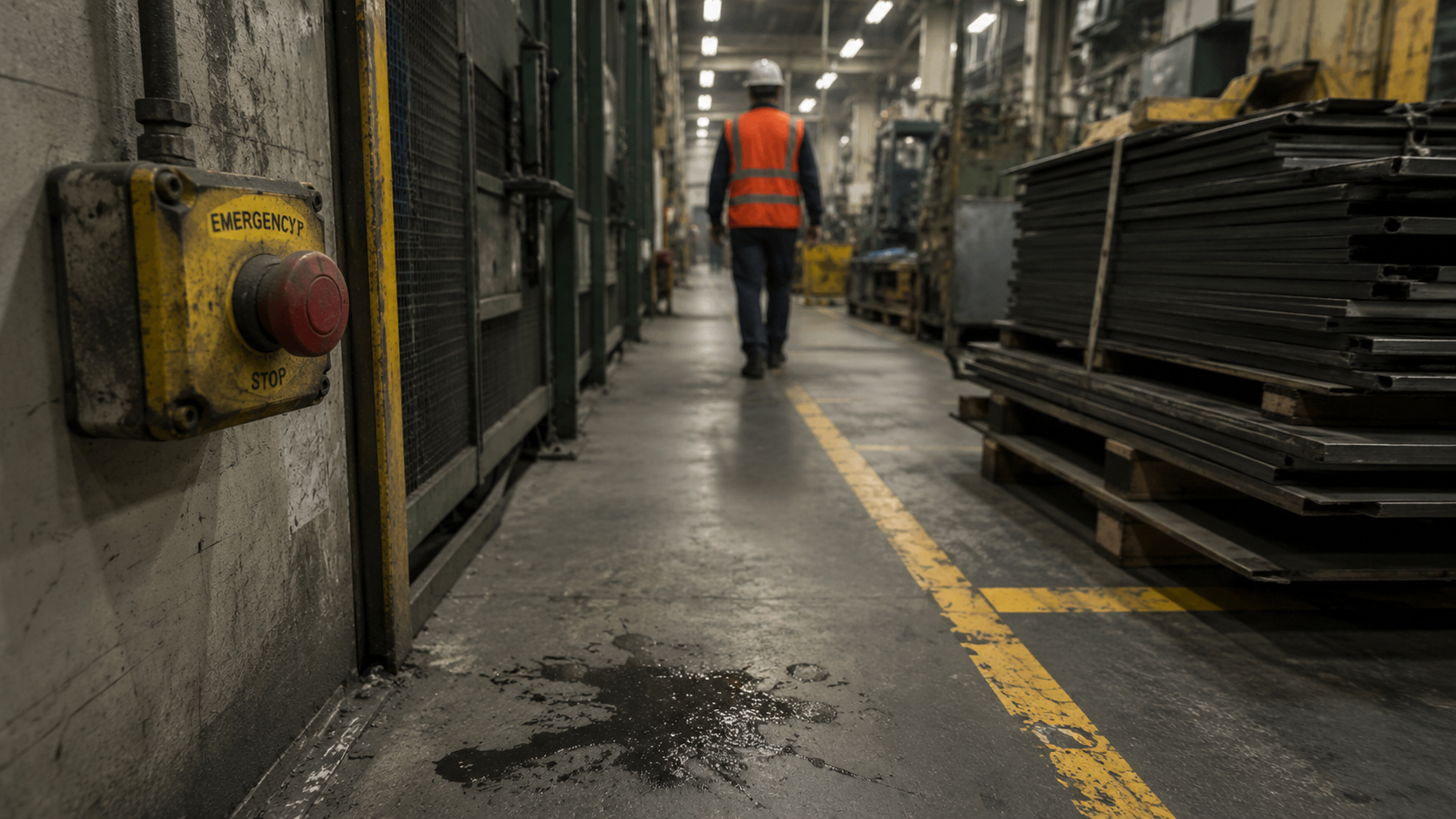
매일 같은 통로를 걷고, 같은 기계 앞에 서고, 같은 순서로 작업을 시작하는 현장 근로자에게 그 공간은 이미 '익숙함'으로 가득 차 있다. 바닥의 기름 자국은 어느 순간부터 눈에 들어오지 않고, 통로를 반쯤 막은 자재 더미는 "원래 저기 있던 것"이 되며, 한 번도 작동한 적 없는 비상정지 버튼은 존재 자체가 잊힌다. 이것은 부주의가 아니다. 인간이 반복적 환경에 적응하는 방식, 곧 인지적 습관화의 결과이며, 어떤 현장도 이 과정에서 자유롭지 않다.
문제는 바로 이 지점에서 발생한다. 사고는 대부분 "설마 거기서"라는 자리에서 일어나고, "늘 그렇게 해왔으니까"라는 관행 속에서 싹튼다. 안전관리에서 외부의 시선이 필요한 이유는 단순히 전문 지식의 보완이 아니라, 익숙함이라는 가장 강력한 위험 요인을 걷어내기 위해서다.
Every day, workers walk the same corridor, stand before the same machines, and begin their tasks in the same sequence. For them, the workplace is already saturated with familiarity. The oil stain on the floor stops registering. The stack of materials half-blocking the aisle becomes "just the way it is." The emergency stop button — never once pressed — fades from conscious awareness. This is not negligence. It is the result of cognitive habituation, the human brain's way of adapting to repeated environments. No workplace is immune to this process.
And it is precisely here that danger quietly takes root. Most industrial accidents happen in places where workers once thought "that would never happen here," and in routines so ingrained that no one questions them. The need for an external perspective in safety management is not simply about adding expertise — it is about dismantling the most powerful hazard of all: familiarity itself.
사고는 '예상 밖'이 아니라 '보지 못한 곳'에서 온다
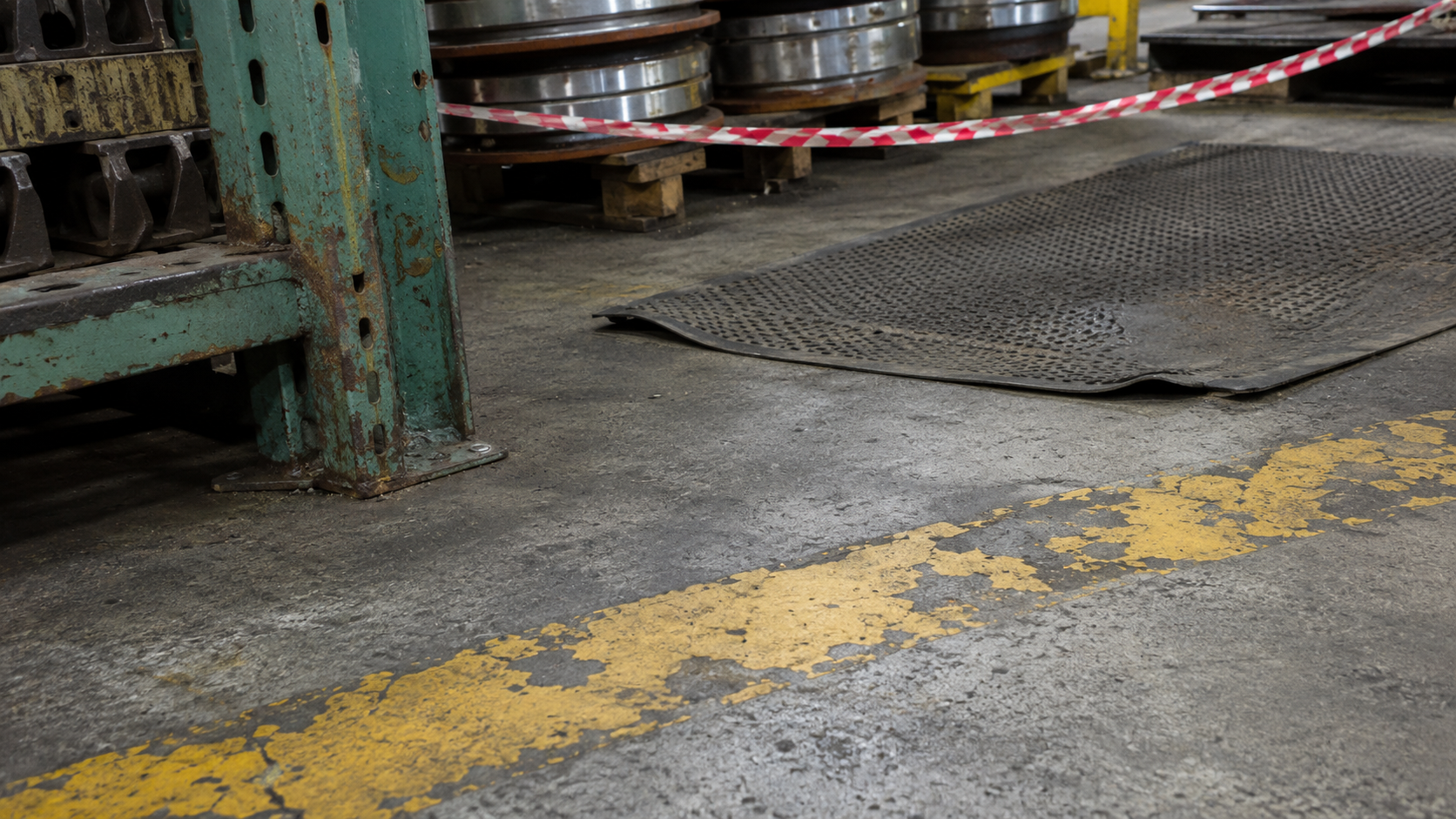
산업현장에서 발생하는 사고의 상당수는 사전에 충분히 예방 가능한 조건에서 출발한다. 그럼에도 사고가 반복되는 것은 위험을 몰라서가 아니라, 위험을 더 이상 위험으로 인식하지 못하기 때문이다. 안전 전문가들은 이를 '위험 감수성의 둔화'라고 부르며, 이는 개인의 자질 문제가 아니라 환경에 오래 노출된 누구에게나 나타나는 현상이다.
더 복잡한 문제는 안전 감수성이 개인마다 현격히 다르다는 점이다. 같은 작업 공간을 바라보더라도 어떤 사람은 발판의 흔들림을 위험으로 감지하고, 어떤 사람은 수년째 그 발판 위에서 작업하며 아무런 이상을 느끼지 못한다. 안전 인식은 경험, 훈련, 담당 업무, 작업 위치에 따라 형성되며 결코 균일하지 않다. 그렇기 때문에 단일한 내부 시각만으로는 현장의 유해·위험요인을 빠짐없이 발굴하는 데 구조적 한계가 있다.
결국 현장을 오래 알수록, 현장을 더 모르게 되는 역설이 작동한다. 익숙함은 경험이 되기도 하지만, 동시에 위험을 가리는 막이 되기도 한다.
사고는 전혀 생각지 못한 곳에서 발생한다는 말은 틀렸다. 정확히는, 늘 생각하지 않게 된 곳에서 발생한다.
Accidents Come Not from the Unexpected, But from the Unseen
A significant proportion of workplace accidents begin with conditions that were entirely preventable. Yet accidents recur — not because workers are unaware of hazards, but because they have ceased to perceive those hazards as dangerous at all. Safety professionals call this "dulled hazard sensitivity," and it is not a character flaw. It is something that develops in anyone exposed to the same environment long enough.
The challenge runs deeper still: safety sensitivity varies enormously from person to person. Standing before the same work area, one person may immediately feel uneasy about a wobbling platform, while another — who has worked on that same platform for years — notices nothing amiss. Safety perception is shaped by experience, training, job role, and physical position. No single internal perspective can surface every hazard a workplace holds; the structure itself guarantees blind spots.
A painful irony follows: the longer one knows a workplace, the less one truly sees it. Familiarity can be a form of experience — and simultaneously, a veil drawn over danger.
The idea that accidents occur in places no one could have anticipated is wrong. More precisely, they occur in places no one has thought about in a long time.
낯선 눈은 다르게 본다 — 외부 시각의 구조적 역할
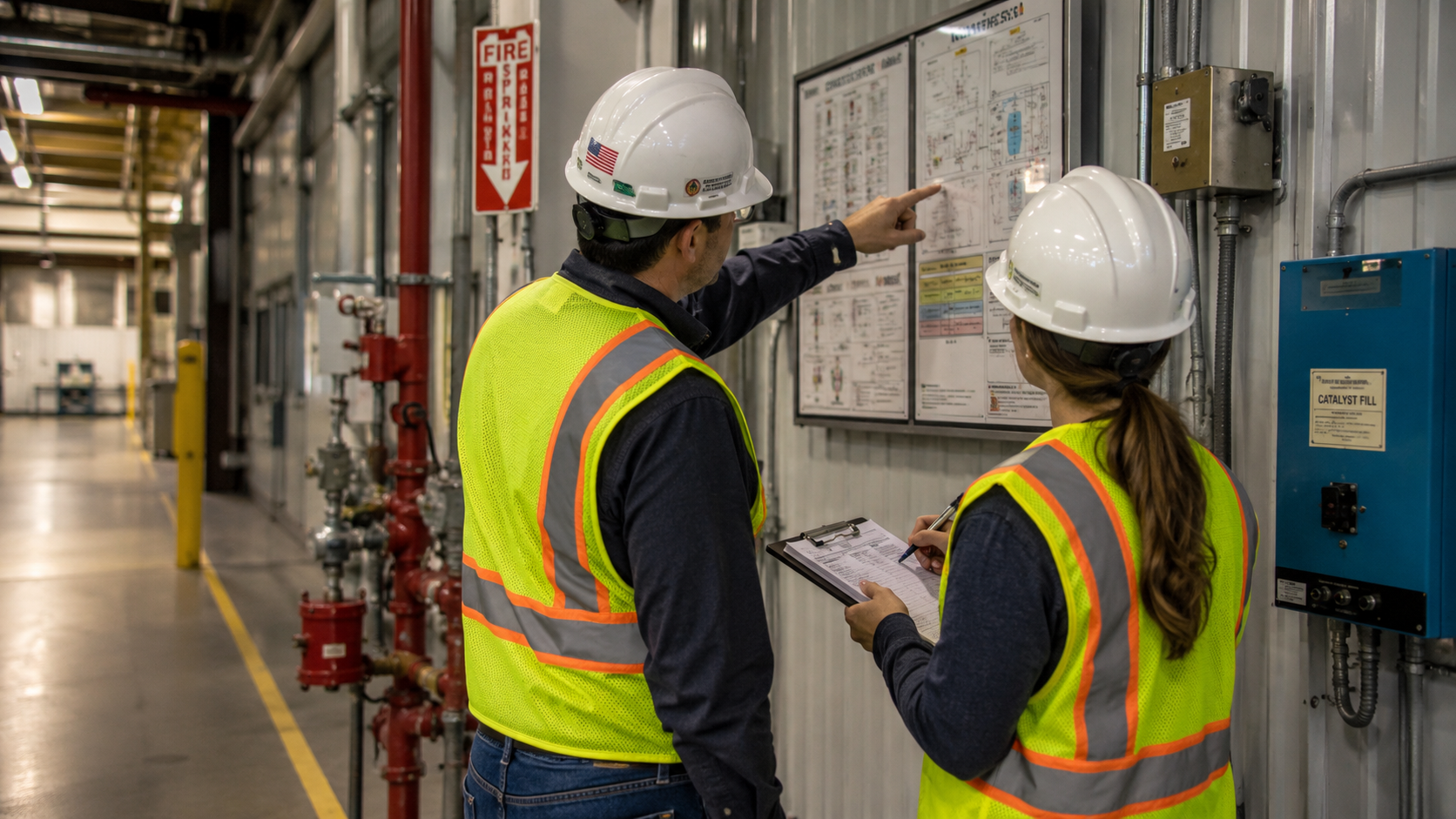
외부 전문가가 현장에 들어섰을 때 가장 먼저 달라지는 것은 '보는 방식'이다. 내부 구성원이 배경으로 처리하는 정보들, 이를테면 배관 아래 웅덩이처럼 고인 냉각수, 비상구 앞에 쌓인 포장재, 회전체 주변의 느슨해진 덮개 같은 것들이 외부의 눈에는 선명하게 포착된다. 이는 전문성의 차이이기도 하지만, 본질적으로는 습관화되지 않은 시선의 차이다.
외부 시각의 효용은 단지 발견에 그치지 않는다. 외부 전문가는 유사 업종의 사고 사례, 규제 동향, 다른 사업장의 개선 사례를 함께 가져온다. 이를 통해 개별 현장이 놓치고 있는 위험이 '우리만의 문제'가 아니라 '구조적으로 반복되는 패턴'임을 인식하게 되고, 개선의 방향도 구체화된다. 특정 작업 방식이 왜 위험한지를 타 현장의 사례로 설명할 수 있을 때, 현장의 수용성과 실행 의지는 훨씬 높아진다.
현장을 잘 아는 눈과 현장을 처음 보는 눈이 함께할 때, 비로소 그 현장은 온전히 보인다.
외부의 시선은 비판이 아니라 발견이다. 익숙함이 지워버린 위험을 다시 지도 위에 올려놓는 작업이다.
A Different Eye Sees Differently — The Structural Role of External Perspective
When an external specialist steps into a workplace, the first thing that changes is how the space is read. The details that internal staff have long since processed as background — coolant pooling beneath a pipe, packaging piled in front of an emergency exit, a loosened cover around rotating machinery — stand out with striking clarity to unfamiliar eyes. This is partly a matter of professional expertise, but more fundamentally, it is the power of a perspective that has not yet been worn smooth by repetition.
External perspectives bring more than fresh observation. Outside specialists carry documented accident patterns from similar industries, evolving regulatory expectations, and improvement models from other sites. When a hazard can be contextualized not as an isolated problem but as part of a recurring structural pattern seen elsewhere, the case for change becomes far more compelling — and the organization's willingness to act, far greater.
When the eye that knows the workplace well is joined by the eye that sees it for the first time, the workplace becomes fully visible for the first time.
An outside perspective is not a criticism — it is a discovery. It is the act of returning to the map the hazards that familiarity has quietly erased.
안전은 이제 시스템의 영역이다 — PDCA와 외부 진단의 접점
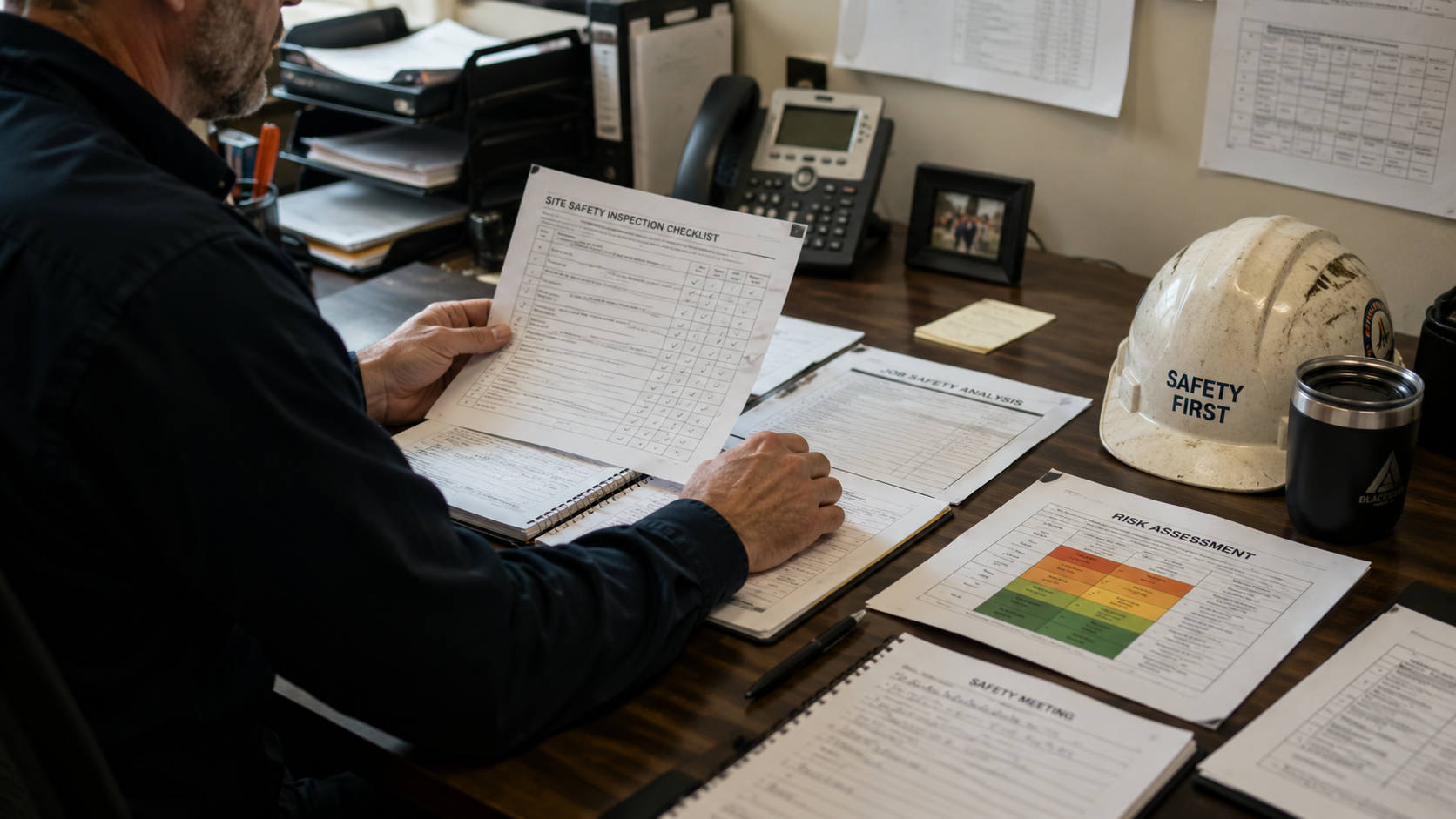
산업안전보건법과 중대재해처벌법이 공통으로 가리키는 방향은 하나다. 사업장 스스로 유해·위험요인을 파악하고 통제하는 자율적 안전보건관리체계를 구축하는 것이다. 외부 컨설팅은 이 체계가 현장에서 겉돌지 않고 실질적으로 작동하도록 돕는 역할을 한다.
ISO 45001이 추구하는 PDCA 사이클에서 가장 취약해지기 쉬운 단계는 'Check'다. 계획을 세우고 실행하는 단계는 조직 내부에서 어느 정도 작동하지만, 그 실행이 실제로 효과적이었는지를 객관적으로 확인하는 단계는 내부 시선만으로는 한계가 뚜렷하다. 외부 전문가의 진단은 바로 이 Check 단계에 객관성을 부여하며, 현재 우리 현장의 안전관리 수준이 어디쯤 있는지를 정확히 보여준다.
중요한 것은 법령의 요건을 기계적으로 충족하는 수준에 머물지 않는 것이다. 우리 현장의 특수성과 작업 방식에 맞는 구체적인 개선 대책이 수립될 때, 안전관리체계는 문서가 아닌 현장의 언어로 살아남는다.
자율안전의 완성은 스스로를 객관적으로 보는 힘에서 온다. 외부의 진단은 그 힘을 빌리는 가장 현실적인 방법이다.
Safety Is Now a Systems Domain — Where PDCA Meets External Diagnosis
Both Korea's Occupational Safety and Health Act and the Serious Accidents Punishment Act point in the same direction: organizations must build autonomous safety and health management systems capable of identifying and controlling hazards from within. External consultation supports this goal by helping such systems take root in the actual texture of the workplace — rather than existing only on paper.
Within the ISO 45001 framework, the PDCA cycle's most vulnerable stage is "Check." Organizations can plan and execute with reasonable consistency; what proves far harder is objectively verifying whether those efforts have actually worked. External diagnosis supplies the objectivity the Check stage demands — placing the organization's actual safety performance against a calibrated reference point.
The goal is not mechanical compliance with regulatory requirements. It is the development of specific, actionable improvements grounded in the unique realities of each workplace — the kind that allows a safety management system to live in the language of the floor, not just the language of the filing cabinet.
The completion of autonomous safety lies in the capacity to see oneself clearly. External diagnosis is the most practical way to borrow that clarity.
현장이 변하면 사람이 달라진다 — 개선의 연쇄 효과
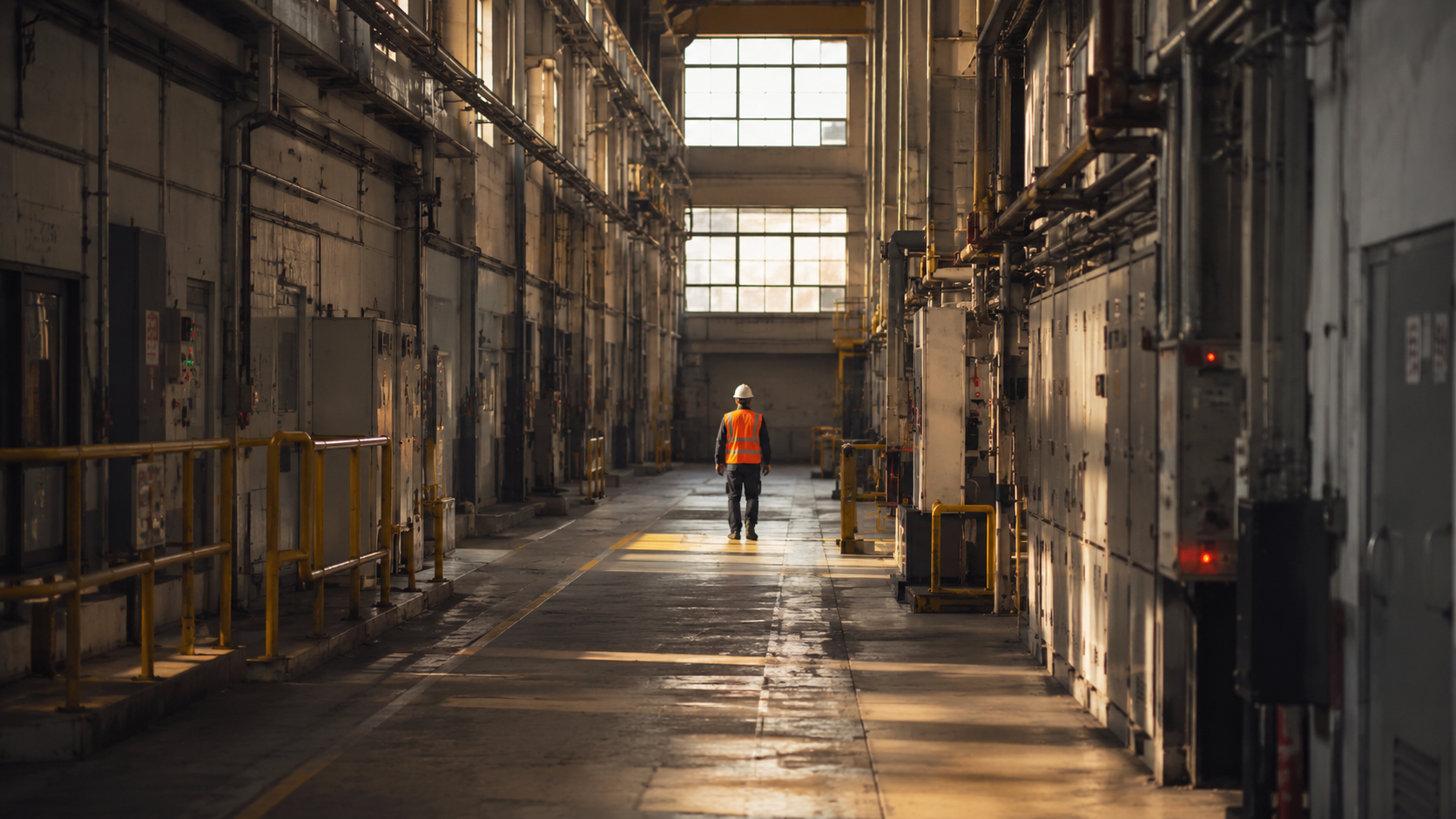
외부 점검을 통해 발굴된 유해·위험요인이 실제로 개선될 때, 현장에서는 눈에 보이지 않는 변화가 함께 일어난다. 근로자들은 "내가 일하는 곳이 나아지고 있다"는 것을 몸으로 느끼게 된다. 오랫동안 불편하다고 생각했지만 말하지 않았던 것들이 개선되고, 위험하다고 느꼈지만 당연하게 받아들였던 환경이 바뀌는 경험은 단순한 물리적 변화 이상의 의미를 갖는다.
이 경험은 안전에 대한 태도를 바꾼다. 안전은 위에서 강요하는 규칙이 아니라 현장을 실제로 지키는 활동이라는 인식이 자리를 잡기 시작하고, 근로자들은 더 적극적으로 위험 요인을 발굴하며 안전 활동에 자발적으로 참여하게 된다. 이것이 안전 성숙도가 높아지는 방식이며, 안전문화가 형성되는 실제 경로다.
근로자가 안전을 신뢰하는 것은 교육 때문이 아니라, 자신의 현장이 나아지는 것을 직접 목격했기 때문이다.
제도가 열어둔 문 — 지금 두드릴 수 있는 기회
외부 시각을 현장에 들이는 일이 반드시 비용을 수반하는 것은 아니다. 고용노동부와 안전보건공단, 각 지방자치단체는 중소규모 사업장을 대상으로 다양한 무료 안전보건 컨설팅 프로그램을 운영하고 있다. 위험성평가 지원, 클린사업장 조성 지원, 안전보건 기술 지도 등 사업장 규모와 업종에 따라 선택할 수 있는 프로그램이 다양하며, 신청 절차도 복잡하지 않다.
이러한 제도적 지원은 단지 비용 절감의 문제가 아니다. 외부 전문가의 시선으로 현장을 점검받고, 유해·위험요인을 발굴하며, 개선 방향을 함께 모색할 수 있는 실질적 기회다. 사업장이 스스로 찾아내기 어려운 사각지대를 제도의 도움으로 채울 수 있다면, 그것을 활용하지 않을 이유가 없다.
정부와 지자체가 운영하는 무료 안전보건 컨설팅은 현장을 새로운 눈으로 볼 수 있는 제도적 기회다. 신청은 선택이지만, 그 결과로 지켜지는 것은 사람이다.
익숙함을 의심하는 것이 안전의 시작이다
안전한 현장은 아무 사고도 일어나지 않은 현장이 아니다. 위험을 발굴하고, 개선하고, 다시 점검하는 순환이 작동하는 현장이다. 그 순환의 출발점에 외부의 시선이 있다. 내부가 익숙함으로 가득 찰수록, 외부의 눈은 더 선명해진다.
유해·위험요인은 대형 설비 안에만 숨어 있지 않다. 매일 지나치던 통로, 습관처럼 반복하던 작업 순서, 당연하게 여겨온 작업 환경 속에 조용히 자리 잡고 있다. 그것을 꺼내 보이게 하는 것이 외부 시각의 역할이며, 그 과정이 쌓여 현장의 안전 성숙도를 높이고, 나아가 산업재해를 줄이는 실질적 경로가 된다.
안전은 이미 안전하다는 확신이 아니라, 아직 보지 못한 것이 있다는 겸손에서 시작된다.
When the Workplace Changes, People Change
When hazards identified through external review are actually addressed, something less visible happens alongside the physical change. Workers begin to sense — in the most concrete terms — that the place where they work is getting better. Discomforts long tolerated without complaint become resolved. Conditions once accepted as simply "how things are" begin to shift. This experience reorders how safety is understood.
That experience changes attitudes. Safety stops feeling like an obligation handed down from above and begins to feel like something that actually protects the people doing the work. Workers start reporting hazards more readily, participating in safety activities more voluntarily — and safety maturity rises as a result. This is how safety culture genuinely forms: not through slogans, but through the repeated experience of a workplace that gets demonstrably safer over time.
Workers trust safety not because they were told to, but because they have watched their own workplace become safer with their own eyes.
A Door the System Has Already Opened
Bringing an outside perspective to a workplace does not require significant financial investment. Korea's Ministry of Employment and Labor, KOSHA, and local governments operate a range of no-cost consulting programs targeted at small and medium-sized enterprises. Programs supporting hazard assessment, clean workplace development, and safety technical guidance are available across industries — and the application process is accessible.
This institutional support is not simply a cost-saving measure. It is a genuine opportunity: to have an expert eye evaluate the workplace, to surface hazards that internal review has missed, and to develop improvement directions in partnership. If blind spots that are hardest to see from inside can be filled with the help of a well-designed public program, there is no reason not to use it.
Government and municipal consulting programs offer a structured opportunity to see your workplace through new eyes. Participation is a choice — but what it helps protect is people.
Questioning Familiarity Is Where Safety Begins
A safe workplace is not one where nothing has ever gone wrong. It is one where a living cycle of discovery, improvement, and re-examination continues to turn. External perspective is where that cycle often begins. The more thoroughly familiarity has filled the internal view, the more sharply the outside eye sees.
Hazards do not hide only inside large machinery. They settle quietly into corridors walked every day, task sequences repeated by habit, work environments accepted without question. Drawing them out — making them visible — is the function of the outside perspective. And it is that process, accumulated over time, that raises a workplace's safety maturity and reduces the human cost of industrial accidents.
Safety begins not with the conviction that things are already safe, but with the humility to acknowledge that there are still things we have not yet seen.